Background
Cyclodextrins were known to form inclusion complexes with free fatty acids, protecting them from oxidation. As an application of this principle, we prepared inclusion complexes of γ-CD with perilla oil and examined their effect on bioavailability through animal studies using rats and mice.
Methods and Results
Step 1: Discovery of enhanced absorption via inclusion complexes
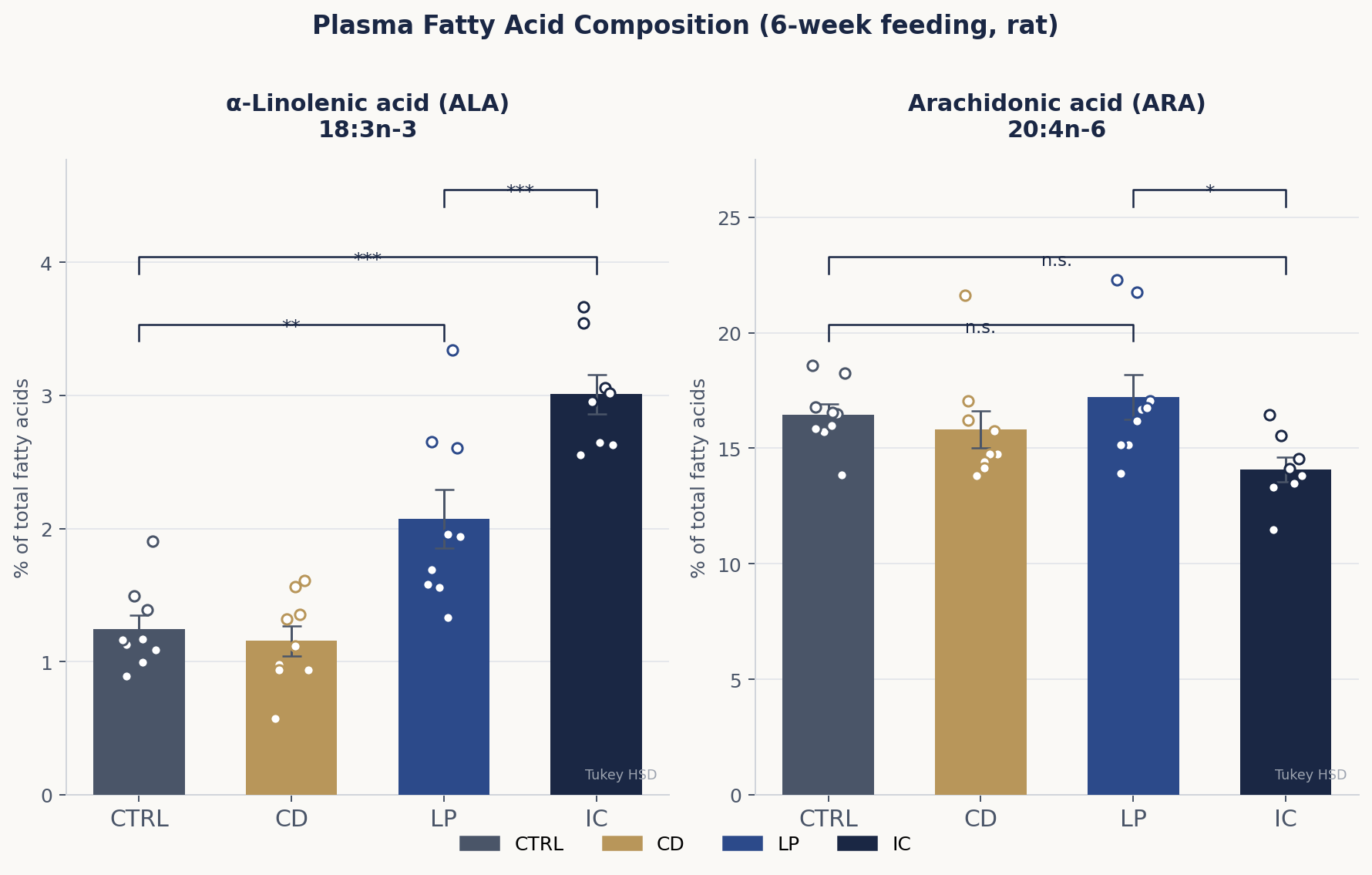
Comparing a group given perilla oil alone with a group given the inclusion complex with γ-CD, we found that the inclusion complex group showed significantly increased plasma concentrations of α-linolenic acid and EPA, alongside a decrease in the omega-6 fatty acid arachidonic acid. This was the first demonstration that encapsulation with γ-CD enhances the bioavailability of perilla oil.
Step 2: Clarifying that the effect arises from "co-ingestion"
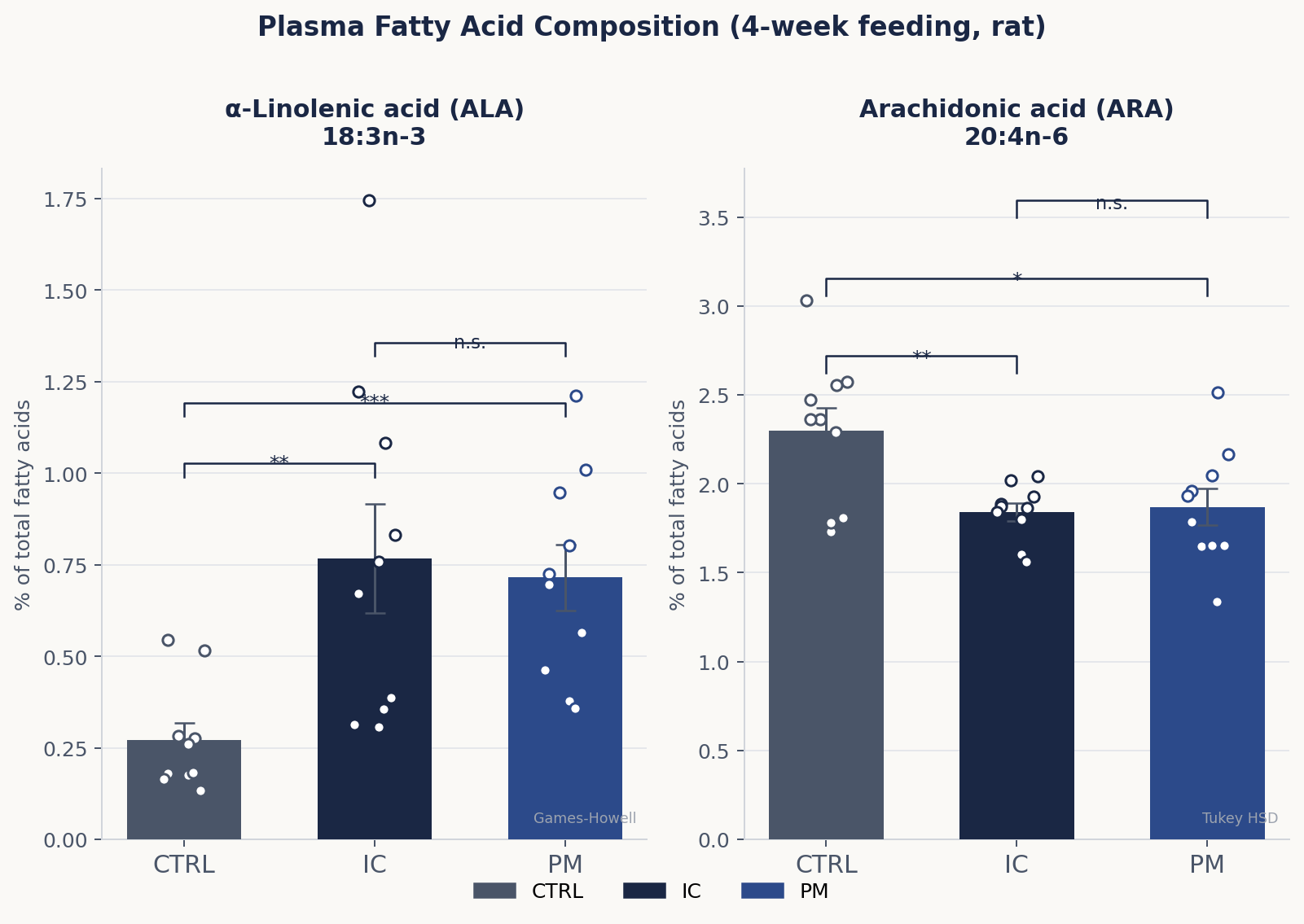
We then added a group that ingested γ-CD and perilla oil as a simple physical mixture, rather than as a pre-formed inclusion complex, and compared it with the inclusion complex group. No significant difference was found between the inclusion complex group and the physical mixture group. This indicates that the effect of γ-CD is not due to "inclusion" (molecular encapsulation) per se, but rather that co-ingesting γ-CD itself promotes lipid absorption in the intestine. This means a comparable effect may be achievable without pre-forming an inclusion complex — an important finding for the development of functional foods.
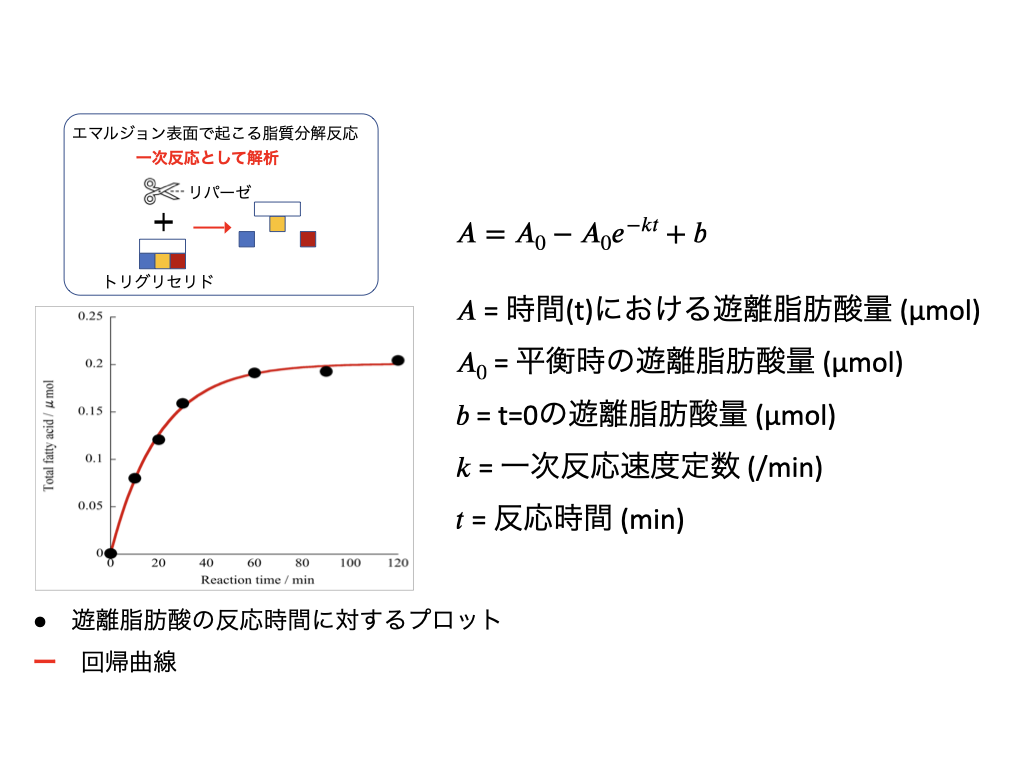
As for how γ-CD promotes absorption, possible mechanisms include enhanced lipase-mediated triglyceride breakdown and effects on emulsion stability or intestinal interfaces, but the detailed mechanism remains under investigation.
Figures & Data
Related Publications
Yoshikiyo et al. (2023) Food Hydrocolloids for Health — doi:10.1016/j.fhfh.2023.100116
Yoshikiyo et al. (2019) Food Chemistry — doi:10.1016/j.foodchem.2019.04.093
Yoshikiyo et al. (2025) International Journal of Molecular Sciences — doi:10.3390/ijms26167776