What is a Cyclodextrin?
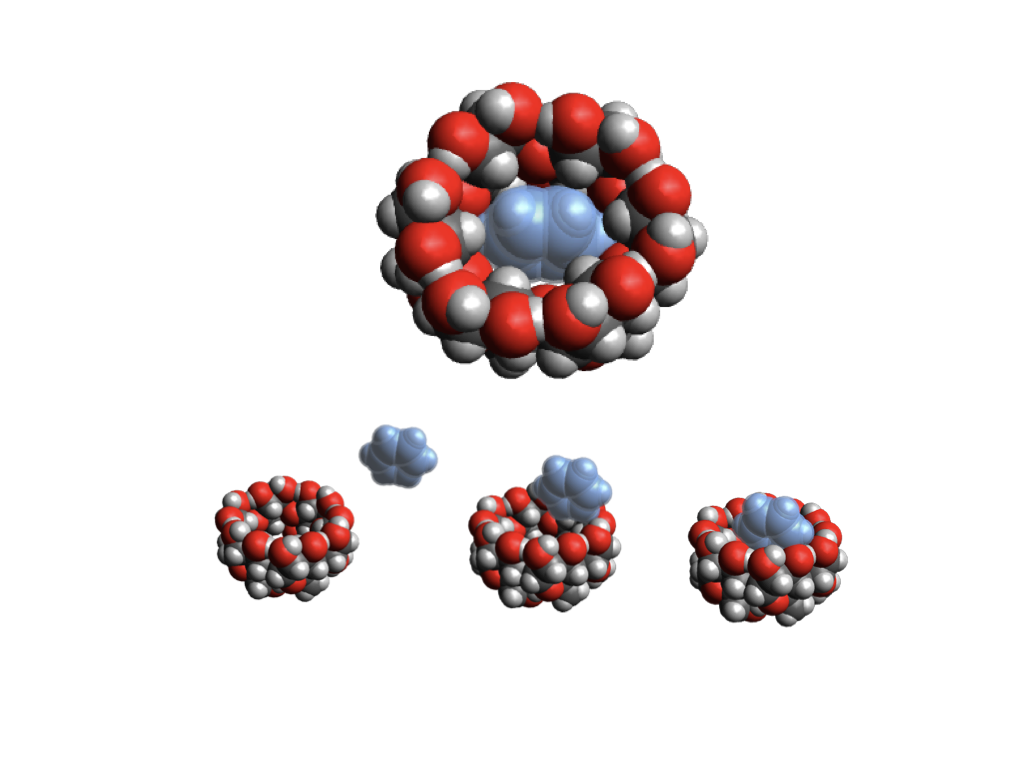
Cyclodextrins (CDs) are naturally occurring oligosaccharides formed from glucose molecules linked in a ring. They have a capsule-like structure with a hydrophobic cavity at the center, which selectively captures various molecules and ions. This phenomenon is called "inclusion," and the resulting complex is called an "inclusion complex."
At the heart of inclusion lies intermolecular interaction. The chemistry of cyclodextrins has developed around understanding and applying forces such as hydrophobic interactions, hydrogen bonding, and van der Waals forces. Similar intermolecular interactions govern many phenomena in living organisms — enzyme reactions, receptor binding, lipid digestion and absorption — and cyclodextrin research serves as a bridge toward understanding and applying these principles.
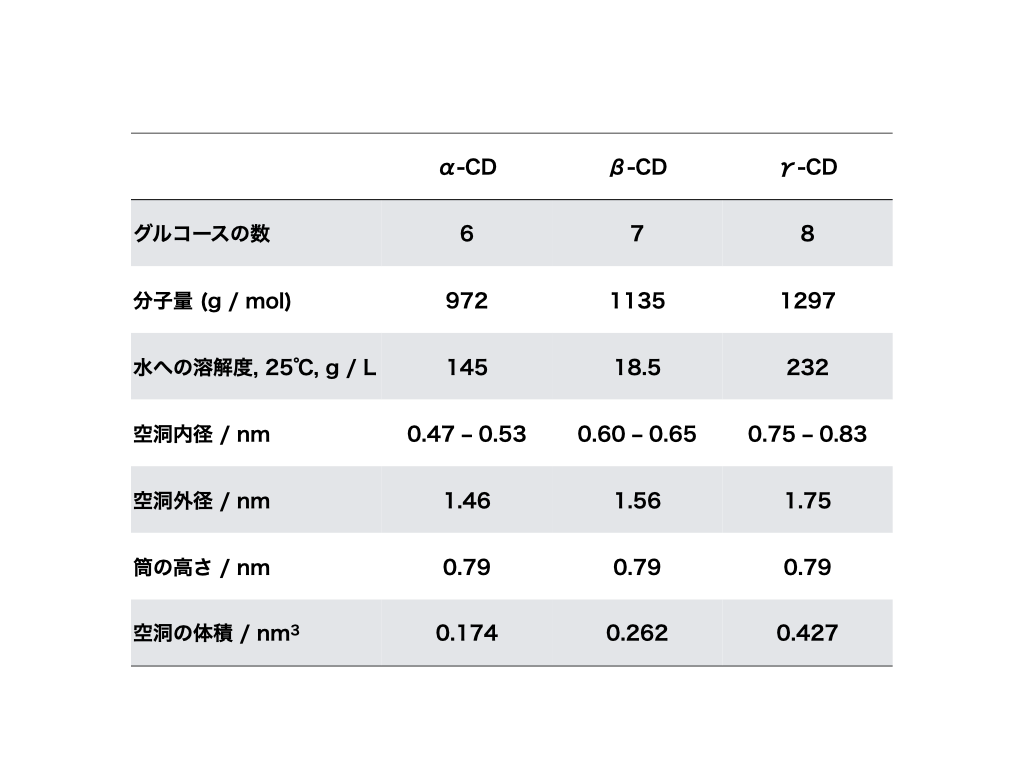
There are three main types of cyclodextrin, distinguished by the number of glucose units: α-CD (6 units), β-CD (7 units), and γ-CD (8 units), each with a different cavity size. Relatively small molecules can be fully enclosed, while larger molecules may only be partially included — fatty acid–cyclodextrin inclusion complexes are a representative example of the latter.
Another major advantage is that cyclodextrins are edible compounds. We are advancing our research using this "edible molecular capsule."
A Foundation of Basic Research
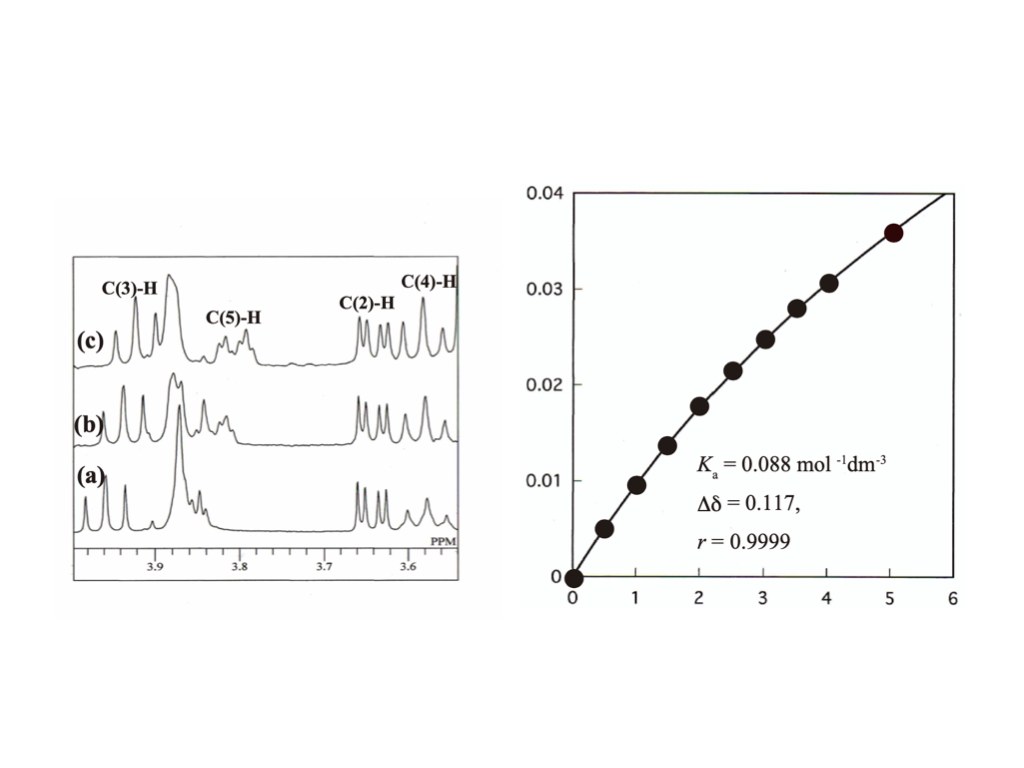
Our group previously conducted systematic studies on inclusion complex formation between α-, β-, and γ-cyclodextrins and various molecules, using NMR spectroscopy and thermodynamic analysis. We determined binding constants for inclusion complexes with organic solvents, ethylene glycol, cycloalkanols, naphthalene derivatives, and organophosphates, quantitatively clarifying the structure, stability, and selectivity of inclusion. We also studied the synthesis and molecular recognition properties of cyclodextrin derivatives, such as guanidino-modified and methylated forms.
Later, when the department's NMR instrument was decommissioned, we shifted our research focus toward applied fields. However, the molecular-level knowledge gained from this basic research — namely, which guest molecules are included by which CDs, and to what extent — remains the foundation of our current food-application research. Our choice to combine γ-CD with perilla oil is rooted directly in this accumulated basic research.
Knowledge of inclusion chemistry from basic research → design of γ-CD/perilla oil inclusion complexes → discovery of enhanced bioavailability.
A solid understanding of molecular recognition is what makes this highly original applied research possible.
Current Research Approach
Building on this foundation in inclusion chemistry, we now experimentally examine food functionality and physiological effects. Our main analytical methods include:
- ✓ HPLC, LC-MS, GC-MS — qualitative and quantitative analysis of fatty acids, amino acids, and other compounds
- ✓ RT-qPCR — gene expression analysis
- ✓ Animal studies — evaluating bioavailability and organ-level effects using rats and mice
- ✓ Statistical analysis (R, Python) — analysis and visualization of experimental data
Understanding the basic interaction of "enclosing and being enclosed" at the molecular level provides a bridge to food science and nutrition.
Figures & Data
Related Publications
Yoshikiyo et al. (2015) Beilstein Journal of Organic Chemistry — doi:10.3762/bjoc.11.168
Yoshikiyo et al. (2012) Bulletin of the Chemical Society of Japan — doi:10.1246/bcsj.20120140
Akita, Yoshikiyo & Yamamoto (2014) Journal of Molecular Structure — doi:10.1016/j.molstruc.2014.05.051